Online price ranges flatten very different projects into one number. Repointing a small accessible mortar area, rebuilding a failed crown, replacing a cap, investigating a roofline leak, and addressing liner damage do not share the same labor, materials, access, or permit path.
For Sunnyvale homeowners, a useful estimate begins with an inspection and clearly states which component is being repaired.
The damaged component sets the baseline
A chimney is an assembly. The cap, crown, flue or liner, mortar, brick, damper, flashing interface, and firebox can fail in different ways. Surface symptoms can overlap: a damp firebox may point to the cap, crown, masonry, roof interface, or more than one condition.
A repair estimate should name the affected component and the evidence supporting the proposed work. “Seal the chimney” is not enough detail to compare scopes.
Access changes labor and protection needs
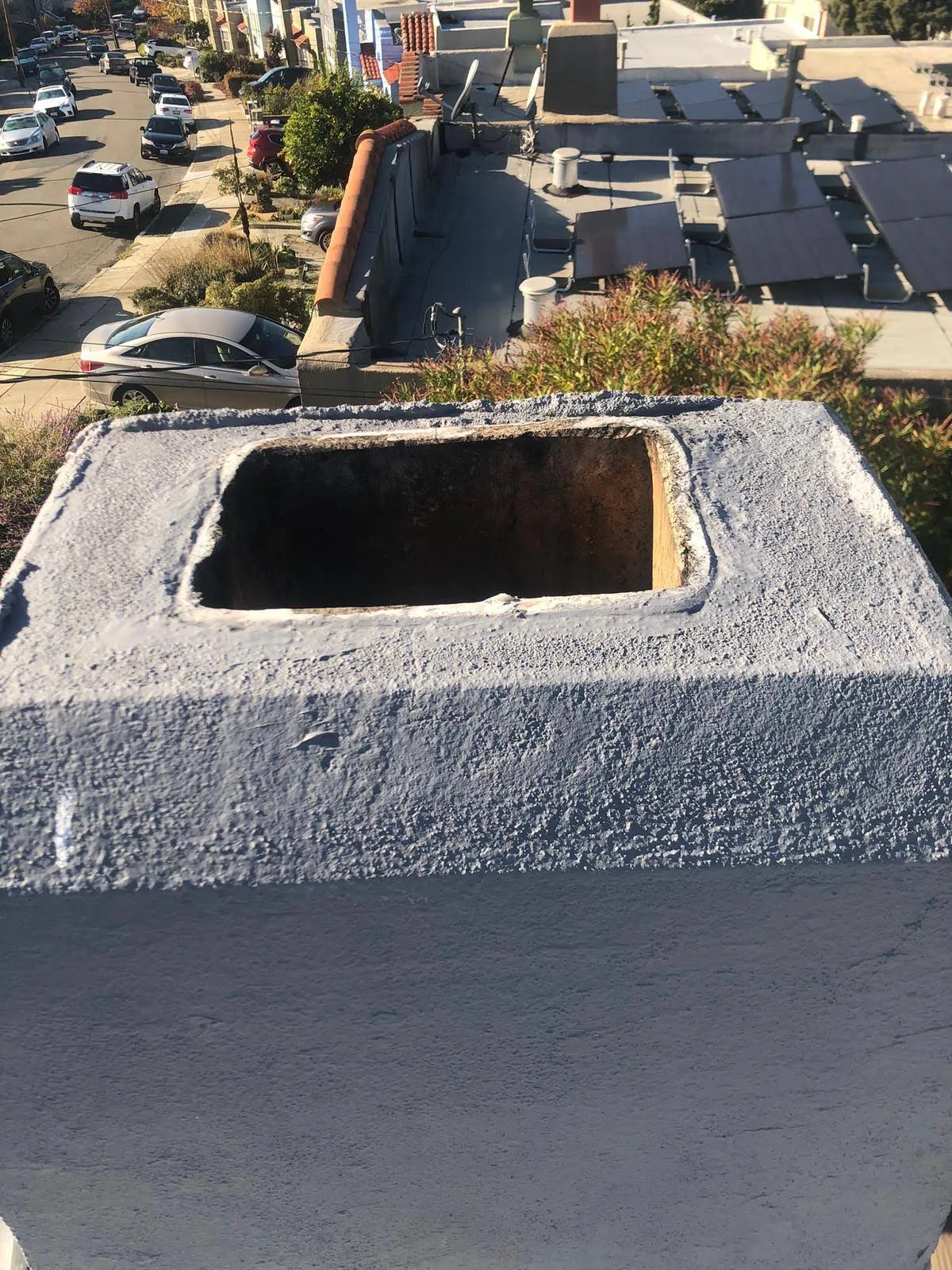
Roof pitch, chimney height, adjacent structures, solar panels, landscaping, parking, and safe ladder placement all influence how work can be reached. Difficult access can require added setup or a different specialist.
Interior work also needs containment around finishes and furnishings. Ask which roof and hearth protections are included.
Hidden deterioration changes the plan
Water can travel behind visible surfaces. Mortar may look serviceable in one area while the crown or flue joint above it has failed. Heat damage and seismic movement can also affect concealed components.
A contractor should explain which unknowns remain after inspection and how a change in scope would be approved. Avoid an estimate that treats every uncertainty as already solved.
- Ask what was directly observed and what is inferred.
- Ask which conditions would trigger additional work.
- Ask for photos when safe access allows documentation.
Materials, matching, and sequencing matter
Existing brick, mortar, stucco, metal components, and liners may require compatible materials. Matching appearance is only one consideration; movement, moisture behavior, temperature, and manufacturer requirements also matter.
Weather and cure time can affect sequencing. A rushed surface treatment may not be a substitute for repairing the source of water entry or deterioration.
Permit and trade coordination can be part of the scope
The City of Sunnyvale lists chimney and fireplace repair within its permit resources. It also directs new chimneys, gas appliances, and fireplace inserts to the One-Stop Permit Center. Project-specific requirements should be confirmed with the City.
Structural concerns, roof flashing, gas work, or appliance-specific venting may require another qualified professional. A strong estimate says who is responsible for each part.