After noticeable shaking, most homeowners check shelves, gas appliances, and visible walls. A masonry chimney also deserves attention because its height, weight, roof penetration, and rigid materials make small changes difficult to judge from the hearth.
This checklist is for observation and planning. Do not climb onto the roof or use the fireplace when damage is suspected. A chimney professional can inspect accessible and interior conditions; structural questions may require an engineer.
Start by leaving the fireplace off
If the earthquake was strong enough to make you question the chimney, wait before lighting a fire. Cracked flue tiles, separated joints, shifted masonry, or fallen debris may not be visible from the room.
Keep people away from areas where loose exterior masonry could fall. For an obviously leaning or unstable chimney, contact emergency or building officials as appropriate.
Look from safe ground-level positions
Walk around the home without entering a fall zone or climbing. Compare the chimney to recent photos if available. New gaps, leaning, displaced caps, cracked mortar, or fallen pieces are reasons for professional assessment.
- New vertical, stair-step, or roofline cracks
- A cap or crown that looks shifted
- Brick, mortar, tile, or metal pieces on the roof or ground
- A gap where the chimney meets the building
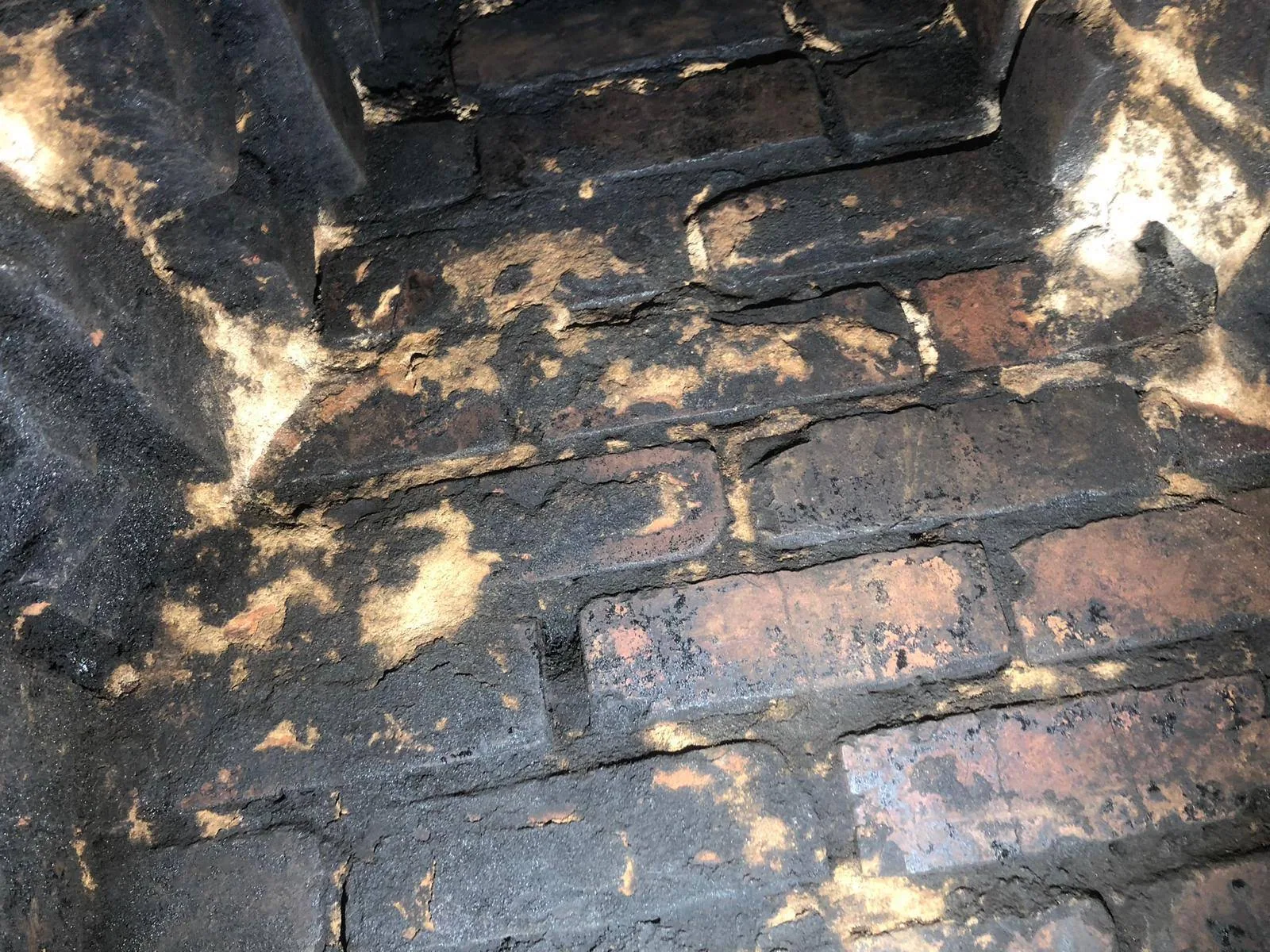
- Fresh interior soot, debris, or cracking around the firebox
Notice changes in the room
A damper that no longer moves normally, fresh dust or debris, a new odor, or a visible change at the firebox can be useful clues. Do not test the system by making a fire.
Photograph what you can see safely and write down when the shaking occurred. That record helps the inspector understand the event and compare conditions later.
Ask for the inspection scope you need
Explain that the visit follows an earthquake. Ask whether the inspector will review accessible exterior masonry, crown and cap, firebox, smoke chamber, and flue surfaces, and whether a camera scan is appropriate.
The report should identify limitations. Concealed structural connections, inaccessible framing, and engineering questions may remain outside a chimney service scope.
Plan repairs and permits after the findings
Do not authorize a generic repair before the damaged component is identified. The City of Sunnyvale publishes permit information for chimney and fireplace repair, and structural work may require additional review.
Keep inspection photos, repair scopes, permits, and closeout records together. They provide a useful baseline after future shaking or when the property changes hands.